
How to Reduce Credit Card Chargebacks: The 2026 Merchant Defense Guide

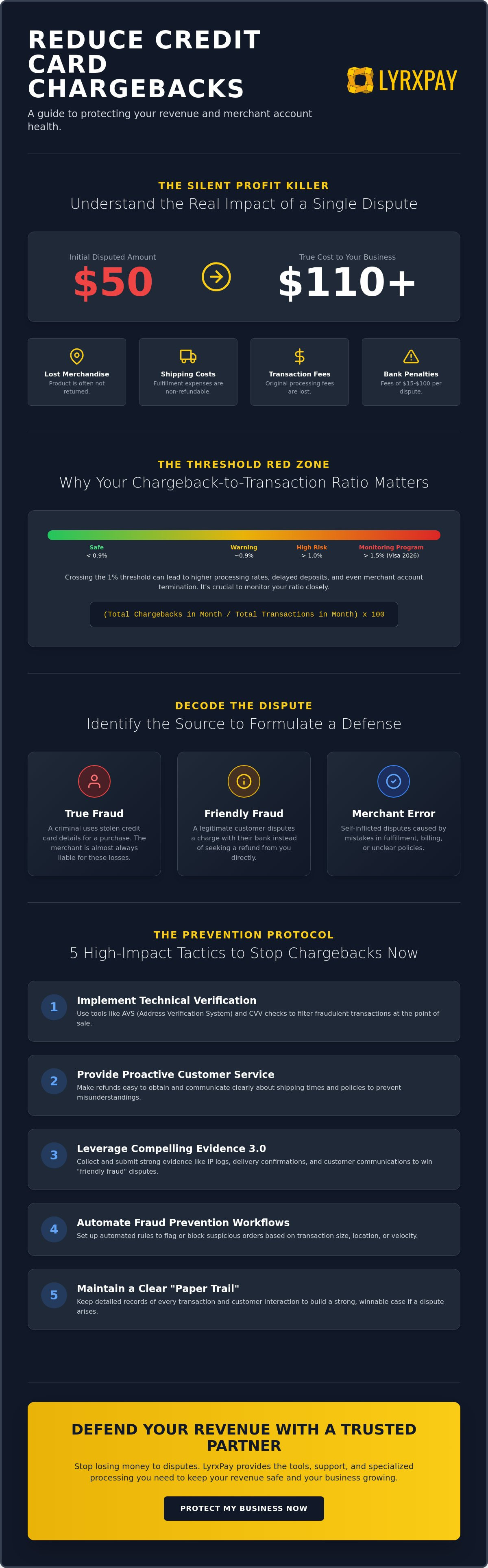
Did you know that a single $50 dispute actually costs your business closer to $110 once you factor in lost merchandise, fulfillment expenses, and operational labor? It's a staggering figure that turns a minor annoyance into a silent profit killer. We understand the stress of watching your hard-earned revenue vanish due to "friendly fraud" or complex bank regulations that feel stacked against you. You deserve a partner who helps you stay ahead of these obstacles rather than just reacting to them. If you are searching for how to reduce credit card chargebacks without losing your mind over paperwork, you've come to the right place.
The landscape changed significantly in April 2026 with Visa's new 1.5% monitoring threshold. This guide provides the high-impact strategies and technical safeguards you need to slash your dispute rates and protect your merchant account health. We will walk you through the latest Visa Compelling Evidence 3.0 rules, show you how to automate your fraud prevention workflows, and provide a clear roadmap to winning more legitimate disputes. By the end of this article, you will have a professional defense plan that keeps your revenue where it belongs; in your business.
Key Takeaways
- Uncover why the true cost of a dispute is often double the transaction value and how to stop this drain on your resources.
- Implement five proven strategies on how to reduce credit card chargebacks through technical verification and proactive customer service.
- Identify the critical differences between "friendly fraud" and criminal activity to ensure you're using the most effective response for each case.
- Leverage the 2026 "Compelling Evidence" requirements to build a winnable case and reclaim revenue you thought was lost.
- Maintain your business liquidity with specialized merchant processing that prioritizes fast deposits and dedicated operational support.
THE SILENT PROFIT KILLER: UNDERSTANDING THE REAL IMPACT OF CHARGEBACKS
Think of a chargeback as a forced withdrawal from your business bank account. Unlike a standard refund where you control the interaction, a chargeback is a bank-mandated reversal initiated by the cardholder or their issuing bank. By understanding the chargeback process, it becomes clear that the system often places the burden of proof entirely on the merchant. It's an aggressive move that doesn't just pull back the sale price; it triggers a chain reaction of financial losses that can cripple a growing company.
When you're investigating how to reduce credit card chargebacks, you must look beyond the surface level transaction. The true cost of a dispute is a composite of several "hidden" drains on your capital:
- Lost Merchandise: In most "friendly fraud" cases, the customer keeps the product while getting their money back.
- Shipping and Fulfillment: You've already paid for the labor and postage to get the item to the door.
- Transaction Fees: The original processing fee you paid to accept the card is rarely refunded.
- Chargeback Penalties: Banks charge a fee for every dispute, typically ranging from $15 to $100 per instance.
Left unchecked, these costs erode your margins and threaten your operational health. This is why robust dispute prevention is one of the most effective business liquidity management tools at your disposal. It keeps your cash where it belongs; in your business.
The 1% Threshold: Why Your Ratio Matters
Banks and card networks don't just look at the dollar amount you lose. They look at your chargeback-to-transaction ratio. While Visa updated its monitoring program in 2026 to a 1.5% threshold for certain penalties, the 1% mark remains the industry's psychological "red zone." If you cross this line, you risk being labeled a "High Risk" merchant. This status leads to higher processing rates, delayed settlement times, and even the termination of your merchant account. To find your standing, use this simple formula: (Total Chargebacks in a Month / Total Transactions in a Month) x 100. If your result is approaching 0.9%, it's time to take immediate action.
Direct vs. Indirect Financial Erosion
The damage isn't always reflected on a balance sheet immediately. Indirect erosion occurs when your staff spends hours or days gathering delivery confirmations, IP logs, and communication records to fight a single $50 dispute. This labor cost often outweighs the value of the transaction itself. Additionally, high dispute volumes make it nearly impossible to negotiate better terms with processors. Learning how to reduce credit card chargebacks is actually a much faster way to lower merchant fees than trying to haggle over basis points. When you prove you're a low-risk partner, the better rates follow naturally.
DECODE THE DISPUTE: FRAUD, FRIENDLY FRAUD, AND MERCHANT ERROR
To effectively tackle revenue loss, you must first categorize the threat. Not every dispute is a criminal act; in fact, many are born from simple confusion or customer opportunism. If you want to master how to reduce credit card chargebacks, your strategy must adapt to the specific "bucket" the dispute falls into. There are three primary categories that define the landscape of modern payment disputes:
- True Fraud: This is the classic scenario where a bad actor uses stolen credit card credentials to make a purchase. The merchant is almost always liable for these losses.
- Friendly Fraud: This occurs when a legitimate customer makes a purchase but later disputes it with their bank instead of seeking a standard refund.
- Merchant Error: These are self-inflicted wounds. They happen when mistakes in your own fulfillment or billing processes give the customer a valid reason to complain.
Each category requires a fundamentally different defense. While true fraud is best handled with technical filters at the checkout, friendly fraud requires a robust paper trail and aggressive communication. Understanding these nuances is the first step toward reclaiming your profits.
The Rise of Friendly Fraud in 2026
In 2026, the psychology of "buyer's remorse" has become a significant hurdle for retailers. We see a rise in trends like "wardrobing," where customers buy high-end apparel for a single event and then file a dispute to avoid the cost. Friendly fraud is the most common cause of non-fraudulent revenue loss for modern merchants. It often stems from the cardholder's legal rights under the Fair Credit Billing Act, which allows for disputes in cases of "billing errors." Unfortunately, some customers interpret this term very broadly to justify a reversal when they simply regret a purchase.
Identifying Merchant Error Red Flags
Sometimes, the call is coming from inside the house. Merchant errors are often the easiest to fix because they are entirely within your control. Common red flags include duplicate billing caused by software glitches, late shipping without proactive updates, and vague billing descriptors. If a customer sees an unrecognizable code on their statement instead of your store name, they might panic and hit the dispute button. Integrating your processing with all in one business financial solutions ensures your data remains consistent across all touchpoints. When your billing is transparent, the customer has no reason to be suspicious. If you're looking for a partner to help audit these internal workflows, exploring specialized processing services can provide the clarity you need to stop these avoidable errors.
THE PREVENTION PROTOCOL: 5 TACTICS TO STOP CHARGEBACKS NOW
STOP THE DISPUTE BEFORE IT STARTS. While understanding the "why" is vital, your daily operations need a concrete hierarchy of defense. We recommend a two-pronged approach: technical verification to block bad actors and aggressive customer service to soothe legitimate buyers. If you want to know how to reduce credit card chargebacks effectively, you must start with a PCI-compliant processing environment. This isn't just a legal requirement; it's your baseline for security. For brick-and-mortar locations, utilizing modern Point of Sale software and hardware ensures that EMV chip data is captured correctly, which shifts the liability for fraud away from your business and back to the bank.
Transparency is your strongest ally against frustration. When customers know exactly when their package will arrive and how to return it, they are far less likely to panic and call their bank. Your prevention protocol should include:
- Technical Verification: Use automated tools to flag suspicious IP addresses or mismatched shipping data.
- Aggressive Customer Service: Respond to inquiries within hours, not days, to resolve issues before they escalate.
- Secure POS Hardware: Ensure every in-person transaction is encrypted and chip-verified.
- Shipping Transparency: Provide real-time tracking numbers and delivery confirmations.
- PCI Compliance: Maintain a secure network to protect cardholder data and reduce your liability footprint.
Optimize Your Billing Descriptors
Confusion is the leading cause of friendly fraud. If a customer doesn't recognize a charge, they call their bank, not you. A "Bad" descriptor looks like "TX-9982-SVC," while a "Good" descriptor looks like "YourCompanyName-Austin-555-0199." We advise all merchants to ensure their billing descriptor matches their website URL exactly. Including a direct phone number in the soft descriptor allows the customer to call you for clarification instead of initiating a formal reversal.
Deploy Advanced Technical Safeguards
Technical filters act as your digital bouncers. At a minimum, your checkout gateway should require an Address Verification Service (AVS) match and the CVV code from the back of the card. For online retailers, 3D Secure 2.0 (3DS2) is the 2026 gold standard for security. It adds a frictionless layer of authentication that verifies the cardholder's identity in real-time. LyrxPay's secure processing automatically integrates these tools, allowing you to focus on your craft while we handle the gatekeeping.
Master the Art of the Refund
Economics dictate that a refund is always cheaper than a chargeback. As we noted earlier, the all-in cost of a dispute can exceed $110, whereas a refund only costs you the transaction value. Make your refund button easier to find than the bank's dispute button. Additionally, consider enrolling in pre-dispute alert systems. These networks give you a 24 to 72-hour window to issue a refund before a formal dispute is filed, providing a proactive way how to reduce credit card chargebacks by neutralizing them in their infancy.
MASTER THE DISPUTE: A DATA-DRIVEN BLUEPRINT FOR WINNING REVERSALS
WIN THE FIGHT. Many business owners feel that once a dispute is filed, the money is already gone. This is a myth. While your primary goal is how to reduce credit card chargebacks through the prevention tactics we've discussed, your secondary goal must be a high win rate for the disputes that slip through. Card networks have established clear rules for what constitutes a valid transaction. If you can provide the specific data they require, you can reverse the reversal and reclaim your revenue. It's about moving from a defensive crouch to a position of evidence-based authority.
Timing is everything in the world of merchant defense. You have a narrow window to respond to notifications; typically 30 days for Visa, 45 days for Mastercard, and a mere 20 days for American Express. Missing these deadlines results in an automatic loss. This is where integrated bookkeeping becomes a lifesaver for your operations. When your processing is synced with your financial records, you don't have to spend hours digging through emails or paper files. You can pull the necessary data in minutes, ensuring you never miss a response window due to administrative friction.
The Compelling Evidence Checklist
Card issuers require "Compelling Evidence" to side with a merchant. This isn't just a simple receipt. It's a collection of data points that prove the cardholder authorized the purchase and received the value. Under the updated 2026 guidelines, digital signatures and IP tracking are the "DNA" of a successful rebuttal. We recommend gathering these essential items for every case:
- Proof of Delivery: Signed receipts or tracking numbers that show the item reached the cardholder's billing address.
- Digital Footprints: IP logs, device IDs, and timestamps that link the transaction to the customer's known location.
- Customer Communications: Saved emails, chat logs, or text messages where the buyer acknowledged the order or asked for support.
- Social Media Context: In "friendly fraud" cases, a photo of the customer using the product can be a powerful piece of evidence.
- Historical Invoices: Use your QuickBooks integration to show a pattern of previous, undisputed purchases from the same customer.
Crafting the Perfect Rebuttal Letter
Your rebuttal letter is your chance to present your case to the bank's human reviewer. Keep it professional, objective, and brief. Don't let frustration or emotion cloud the facts. Your goal is to map your evidence directly to the specific reason code provided in the dispute notification. Structure your letter with a clear summary of the transaction, followed by a logical list of your evidence, and end with a firm request to reverse the chargeback. If you're tired of the stress that comes with managing these complex evidence files, partner with a processing expert who can help streamline your dispute management and protect your bottom line.
PARTNER FOR PROTECTION: HOW LYRXPAY DEFENDS YOUR REVENUE
CHOOSE AN ADVOCATE, NOT JUST A PROCESSOR. Most payment companies view you as a number in a database; we view you as a partner in a shared mission. Throughout this guide, we've explored the technical and tactical steps of how to reduce credit card chargebacks, but the most effective safeguard is a partner who anticipates your needs. We don't just facilitate transactions. We provide the managed care your administrative operations require, allowing you to step away from the stress of dispute management and back into your role as a creator and leader.
Our approach is grounded in transparency and proactive defense. By integrating your processing with expert bookkeeping and payroll solutions, we create a 360-degree view of your business health. This visibility is your greatest asset when a dispute arises. You won't have to scramble for records or wonder how a reversal affects your bottom line. We've already done the heavy lifting, ensuring your data is organized, accessible, and ready to be used as compelling evidence at a moment's notice.
Next-Day Deposits and Cash Flow Stability
Disputes are more than just a loss of revenue; they are a disruption to your liquidity. When a bank freezes funds during a 120-day investigation window, it can stall your growth. LyrxPay offsets this volatility by providing next-day deposits, ensuring your daily operations remain funded even when a transaction is under review. This level of stability is critical for high-stakes sectors, such as merchant services for medical offices, where consistent cash flow is the lifeblood of patient care. Faster access to capital is a merchant's best defense against volatility.
Integrated POS: Security at the Point of Sale
Security begins the moment a card is swiped, dipped, or tapped. Our modern Point of Sale software and hardware utilize advanced EMV chip technology to virtually eliminate card-present fraud. If a transaction is chip-verified, the liability for a "true fraud" dispute typically shifts away from you and back to the card-issuing bank. Beyond the hardware, our seamless QuickBooks integration ensures that every sale is recorded with the precision needed for bulletproof record-keeping. When your payroll, bookkeeping, and processing live in one ecosystem, you gain the clarity needed to spot risk before it turns into a chargeback. Are you ready to stop reacting and start defending? Audit your processing risk with LyrxPay today to identify vulnerabilities and secure your 2026 revenue.
RECLAIM YOUR REVENUE AND PEACE OF MIND
Managing payment disputes shouldn't feel like a second job. By moving from a reactive stance to a proactive defense protocol, you've already taken the most important step in protecting your bottom line. You now have the blueprint for how to reduce credit card chargebacks through technical safeguards, transparent communication, and data-driven evidence gathering. Remember, a single well-documented rebuttal doesn't just recover a sale; it saves your business from the compounding costs of lost inventory and administrative fees.
You don't have to carry this burden alone. We are here to act as your dedicated ally, providing the expert Texas-based merchant advocacy you deserve. With next-day deposits to keep your cash flowing and seamless QuickBooks and Xero integration for bulletproof record-keeping, we help you focus on your craft while we handle the heavy lifting. It's time to move toward a simpler, more secure financial future. Secure your revenue with LyrxPay's lower-fee processing and expert support today. Your business is worth the protection.
Frequently Asked Questions
What is a 'Reason Code' and why does it matter for my dispute?
A 'Reason Code' is an alphanumeric string assigned by the issuing bank that identifies the specific justification for a cardholder's dispute. It matters because it dictates the exact type of "Compelling Evidence" you must provide to win the case. For example, a code for "merchandise not received" requires a delivery receipt, while "unrecognized transaction" might require IP logs or historical invoices.
How long does a customer have to file a chargeback in 2026?
In 2026, cardholders generally have up to 120 days from the transaction or expected delivery date to initiate a dispute. However, this window can extend to 540 days for specific situations, such as services paid for in advance that were never delivered. Staying vigilant with your digital records is the only way how to reduce credit card chargebacks that occur months after the initial sale.
Does a refund stop an active chargeback from hitting my ratio?
No, issuing a refund after a chargeback has been formally filed won't remove the dispute from your merchant account ratio. In fact, doing so can result in a "double loss" where you lose both the refund amount and the chargeback amount. Always wait for the dispute process to conclude or use a pre-dispute alert system to refund before the bank takes formal action.
What is the difference between a retrieval request and a chargeback?
A retrieval request is a preliminary inquiry where the bank asks for more information about a transaction, whereas a chargeback is a forced reversal of funds. While retrieval requests don't affect your merchant ratio, they are often the final warning before a full dispute. Responding quickly to these inquiries is a proactive strategy for how to reduce credit card chargebacks before they become costly penalties.
Can I block a specific customer from purchasing again after a dispute?
Yes, most modern payment gateways allow you to "blacklist" or block specific emails, IP addresses, or card numbers from making future purchases. While this doesn't fix the current dispute, it prevents "serial disputers" from targeting your business again. This technical barrier is a simple but effective way to protect your inventory and staff time from repeat offenders who abuse the system.
How does 3D Secure 2.0 impact the checkout experience for my customers?
3D Secure 2.0 (3DS2) provides a frictionless checkout experience by analyzing over 100 data points in the background to verify the customer's identity. Unlike older versions, it rarely requires a password or extra step unless the transaction is flagged as high-risk. It offers the security of a "liability shift" for the merchant without adding the checkout friction that leads to abandoned carts.
Will LyrxPay help me fight a chargeback if it occurs?
Absolutely, LyrxPay acts as your dedicated advocate throughout the entire dispute lifecycle. We provide the integrated reporting and expert support needed to gather evidence and submit a professional rebuttal letter. Our goal is to alleviate the stress of administrative management while helping you maintain a healthy merchant account status through proactive risk audits and personal attention.
How much does a typical chargeback fee cost a merchant?
Merchants should expect to pay a chargeback fee ranging from $15 to $100 for every dispute initiated by a customer. This fee is charged by the payment processor and is often non-refundable, even if you eventually win the case. This cost is separate from the loss of the original sale price, shipping costs, and the value of any lost merchandise.