
Integrated Payroll and Bookkeeping Services: The 2026 Merchant Guide
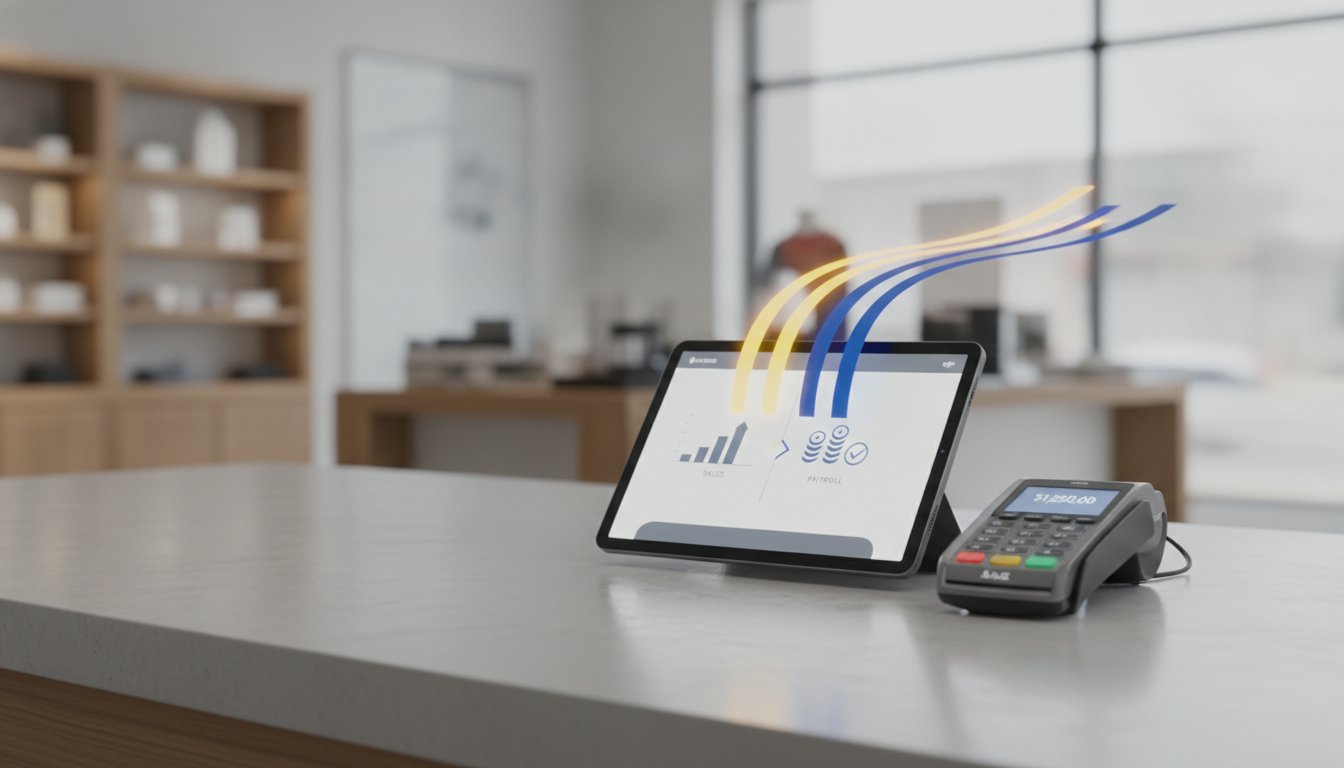
What if your financial back office could run itself while you focus on actually growing your business? With the average cost of payroll noncompliance reaching over $845 per employee annually, the stakes for your administrative accuracy have never been higher. You likely started your business to serve customers, not to spend your Sunday nights reconciling merchant statements or worrying about the 2026 Social Security wage base limit. It's frustrating to feel like you're paying multiple vendors for the privilege of doing manual data entry yourself. Transitioning to integrated payroll and bookkeeping services allows you to stop playing middleman between your own bank accounts and your ledger.
If you're tired of hidden fees and disjointed systems, there's a more efficient path forward. This guide shows you how to eliminate administrative friction and protect your cash flow by unifying your revenue and expenses into one high-efficiency workflow. We'll explore how modern automation handles everything from next-day deposits to complex IRS compliance, transforming your back office into a hands-off asset. By the end, you'll see how to achieve better visibility into your daily cash flow while lowering your overall transaction and service fees.
Key Takeaways
- Distinguish between "software-only" tools and a true concierge model that provides managed care for your back office.
- Identify the hidden costs of "Vendor Bloat" and learn why lowering your processing fees is the first step toward reducing total overhead.
- Close the "Payroll Funding Gap" by using next-day deposits to ensure your sales revenue is available for wages when you need it.
- Follow a step-by-step Financial Friction Audit to simplify your move to integrated payroll and bookkeeping services without disrupting your daily operations.
What are Integrated Payroll and Bookkeeping Services?
Imagine your merchant processing, tax compliance, and financial recording all speaking the same language in real time. That is the essence of integrated payroll and bookkeeping services. It isn't just a software bundle; it's the total elimination of the manual "bridge" you usually have to build between your sales and your ledger. By 2026, more than 75% of tax authorities globally are expected to enforce real-time or near-real-time reporting. This shift makes manual bookkeeping not just a slow process, but a significant liability for your business health. Modern systems leverage Payroll automation to sync employee hours with tax withholding and merchant deposits instantly, ensuring you stay ahead of tightening regulations.
There's a critical difference between "software-only" DIY tools and a "managed" concierge service. Software gives you the tools, but a concierge service provides the expertise to use them. Software-only tools often leave you holding the bag when an API disconnects or a tax rate changes. If a sync fails, you're the one spending your Friday evening on a support chat. A managed concierge service provides advocacy and oversight, acting as a defender of your time and resources. The goal is to move you away from a mere transaction and toward a long-term professional relationship where your back office is handled with "managed care."
The three pillars of this model are automated recording, compliant filing, and strategic funding. Automated recording removes the human error from daily tallies. Compliant filing protects you from the $845 average penalty per employee for payroll noncompliance. Strategic funding ensures you have the liquidity to meet your obligations without the stress of waiting for funds to clear. When these pillars are unified, your financial data moves from a state of chaos to a state of confidence.
The Core Functions of a Unified Back Office
A unified system turns every transaction into an automated movement. When a customer swipes their card at your point of sale, the system generates journal entries that account for both the sale and the processing fee. It handles multi-state tax filing without you needing to check the 2026 California SUI rates manually. Real-time reconciliation ensures your bank balance and books stay in sync, protecting you from the "payroll funding gap" where sales are on the books but cash isn't in the account.
Why 'Administrative Friction' is Killing Your Growth
Administrative friction is the invisible weight that slows down scaling. If you spend 10 hours a week on manual data entry, you lose 500 hours a year that could be spent on customer acquisition. Data silos between your payment processor and your accountant lead to expensive errors, especially when reconciling merchant fees. Unifying these functions lets you scale your operations without the immediate overhead of a full-time internal controller, giving you the oversight of a professional financial team without the executive-level salary.
The Real Cost of Disconnected Systems: Standalone vs. Integrated
Operating with disconnected financial tools is often like trying to drive a car with four different steering wheels. You might move forward, but the effort required to keep everything aligned is exhausting. Many business owners fall into the "Vendor Bloat" trap, paying separate base fees for payroll, bookkeeping software, and payment processing. These small, monthly subscriptions feel manageable individually, yet they quickly aggregate into a significant drain on your bottom line. Reducing your total overhead effectively begins when you understand how to lower merchant fees as part of a broader strategy to unify your financial ecosystem.
The danger isn't just financial; it's regulatory. When your payroll data doesn't match your bookkeeping records, you invite unwanted scrutiny. The IRS looks for consistency between what you report as wages and what your books show as expenses. In an era where 75% of tax authorities are moving toward real-time reporting by 2026, a simple data entry error can lead to expensive penalties. By choosing integrated payroll and bookkeeping services, you ensure that every dollar paid to an employee is automatically reflected in your ledger, creating an audit-ready trail without the manual stress.
The Standalone Provider Trap
Standalone vendors create a "data lag" that obscures your true cash position. If your merchant processor takes three days to deposit funds but your payroll software pulls taxes immediately, you risk overdraft fees or bounced checks. You also face the frustration of being caught between two support teams when an integration fails. Each vendor blames the other, leaving you to solve a technical problem you aren't paid to handle. While many review sites list various payroll software and services, they often skip over the hidden cost of the time you'll spend playing IT support for your own business.
The Integrated Advantage for 2026
Moving to a unified model replaces friction with flow. Bundled service pricing eliminates the "nickel and diming" common with standalone apps, providing a predictable monthly cost. You gain a single point of contact for your entire financial workflow, ensuring that if a question arises, it gets answered by someone who sees the whole picture. Leveraging all-in-one business financial solutions simplifies end of year tax prep because your data is already reconciled and categorized. This proactive approach allows you to reclaim hours of executive time. If you can reinvest just five hours a week into revenue generating activities, the ROI of your back office shifts from a cost center to a growth engine. If you're ready to see how this clarity feels, exploring a partnership with LyrxPay is the first step toward a more manageable future.
Liquidity and Payroll: Why Your Merchant Processor Matters
Have you ever looked at a record breaking sales report only to realize your bank account doesn't have enough cleared cash to cover tomorrow's payroll? This is the "Payroll Funding Gap." It's the stressful delay between swiping a customer's card and actually having those funds available to pay your team. Traditional processors often stick to three day settlement cycles, effectively holding your revenue hostage while your wage obligations loom. In the world of integrated payroll and bookkeeping services, this delay is a relic of the past. By unifying your processing with your back office, you ensure that the money you earn today is ready to support your staff tomorrow.
Modern processing bridges this gap by prioritizing speed over tradition. When your merchant services and payroll exist in the same ecosystem, next day deposits become the standard rather than a luxury. This immediate access to capital is one of the most effective business liquidity management tools available to a growing company. It transforms your cash flow from a guessing game into a predictable, steady stream. Following the SBA guidelines on payroll requires strict adherence to payment schedules and tax withholding; if your funds are tied up in "processing limbo," you risk missing those critical deadlines.
Eliminating the 'Friday Panic' with Next-Day Deposits
Faster access to your credit card and ACH funds ensures you never have to scramble to cover a pay cycle. This reliability does more than just keep your employees happy; it improves your business credit profile by maintaining consistent account balances. LyrxPay prioritizes merchant liquidity as a foundational feature of our integrated payroll and bookkeeping services. We believe that a merchant shouldn't have to wait for their own money to satisfy their administrative obligations. When your deposits settle quickly, you can focus on strategy instead of bank balances.
Deep QuickBooks and Xero Integration
The power of a truly unified back office lies in the automated API sync between your POS and your ledger. Instead of manual entries, every transaction fee and gross deposit is recorded instantly. This reduces the "accounting clean up" costs that usually pile up at the end of every quarter. With real time visibility, you can see your labor costs relative to daily sales volume as it happens. This clarity allows you to make informed staffing decisions on the fly, ensuring your payroll expenses never outpace your actual revenue.

How to Transition to an Integrated Payroll and Bookkeeping Provider
Moving your entire financial back office feels like a daunting task. You might worry about data loss, missed tax deadlines, or the sheer time it takes to set everything up. However, the move toward integrated payroll and bookkeeping services doesn't have to be a solo mission. By following a structured migration plan, you can shift from a fragmented system to a unified workflow without disrupting your daily operations. The first step is conducting a Financial Friction Audit. This involves looking at your current workflow and identifying exactly where your data gets stuck. Do you spend hours manually entering transaction fees? Does your payroll software fail to talk to your bank account? Pinpointing these gaps allows you to build a system that actually serves your growth.
Preparation is the key to a smooth transition. Before you flip the switch, you need to gather your essential documentation. This includes your historical tax filings from the last two years, current employee W-4s, and your existing chart of accounts. Having this data ready ensures that your new provider can map your history accurately into the new system. Most importantly, choose a provider that offers a concierge migration service. Avoid "DIY" portals that leave you to figure out the technical sync on your own. A true partner acts as an advocate, doing the heavy lifting of data migration so you can stay focused on your customers.
Phase 1: Data Audit and Vendor Vetting
During this phase, look closely for hidden fees in your current merchant and payroll contracts. Many legacy vendors bury "statement fees" or "integration surcharges" that add up quickly. Ask direct questions about API stability and how often the system syncs with QuickBooks or Xero. It's also vital to ensure your new provider understands your specific industry requirements. For example, the regulatory needs for merchant services for medical offices differ significantly from retail or hospitality. Your provider should be an expert in your niche, not just a general software vendor.
Phase 2: Implementation and Go-Live
Once the vetting is complete, the focus shifts to mapping. You will map your POS categories directly to your new integrated bookkeeping ledger, ensuring every sale is categorized correctly from the moment it happens. We also set up automated ACH funding for your tax liabilities and net pay, which eliminates the manual "Friday Panic" discussed earlier. Finally, onboard your employees to self-service portals. This allows them to access their own paystubs and W-2s, removing another administrative task from your plate. If you are ready to stop playing middleman between your vendors, you can start your concierge migration with LyrxPay to reclaim your time and peace of mind.
Before fully committing, always execute a parallel run. This means running your new integrated system alongside your old one for at least one full pay cycle. Comparing the results ensures that every withholding, tax rate, and journal entry matches your historical records perfectly. Once the data aligns, you can confidently decommission your old, disconnected tools and enjoy the clarity of a unified back office.
LyrxPay: The Concierge Approach to Business Finance
LyrxPay serves as the strategic bridge between your daily sales and your back office operations. We don't just provide software; we act as a dedicated defender of your time and resources. Our low-fee structure is intentionally designed to keep more capital in your business, moving away from the "nickel and diming" found with standalone vendors. By adopting our "Managed Care" philosophy, you delegate the complexity of integrated payroll and bookkeeping services to experts who treat your operational health as their own mission. This allows you to stop playing middleman between disconnected vendors and start focusing on the growth of your craft.
If you've ever felt like a prisoner to your own administrative tasks, it's time for a change. Most financial services feel cold and clinical, but we prioritize a human-centric relationship that feels both dependable and refreshing. We move you from a state of curiosity about your numbers to a state of absolute confidence in your cash flow. By unifying your revenue and expenses into a single, high-efficiency ecosystem, we remove the friction that typically slows down a scaling business.
Unified Merchant, Payroll, and Accounting
True integration means your POS hardware talks directly to your bookkeeping software without a manual export in sight. We provide expert support for QuickBooks and Xero to ensure your books stay audit-ready every single day. Unlike traditional providers that hold your funds for 48 or 72 hours, our ACH and credit card processing includes next-day deposits by default. This ensures the liquidity you need for payroll is always available when you need it, eliminating the "Friday Panic" for good. When your payment data flows seamlessly into your ledger, you gain a real-time view of your profitability that most business owners only dream of.
The LyrxPay Difference: Expert Partnership
Tired of 1-800 wait times and generic support tickets? We offer direct access to financial experts who actually know your business by name. You'll find transparent, predictable pricing here, with no annual "gotcha" increases to surprise your budget. We combine the infrastructure of a national provider with the personalized, concierge-level touch your business deserves. We pride ourselves on making the complicated feel manageable, ensuring your transition to integrated payroll and bookkeeping services is handled with professional confidence. If you're ready to see how much you can reclaim in time and fees, schedule a consultation with LyrxPay today to audit your current workflows and discover a more efficient path forward.
RECLAIM YOUR TIME AND RESOURCES
The transition to a unified financial model isn't just about saving a few hours each week; it's about protecting your bottom line from the "Vendor Bloat" and funding gaps we've explored. By aligning your revenue and expenses through integrated payroll and bookkeeping services, you gain a level of clarity that standalone tools simply can't provide. You can finally stop playing middleman between your own vendors and start leading your business with data you can trust.
Why settle for fragmented systems when you can have a team that handles the complexity for you? With next-day deposits for all merchants and expert QuickBooks and Xero integration support, the path to a hands-off back office is clearer than ever. We provide concierge-level national support that treats your operational health as a priority, not just a ticket number. It's time to trade administrative friction for professional confidence and focus on your craft.
Streamline your business with LyrxPay's integrated payroll and merchant services.
You've done the hard work of building your business; now let us do the heavy lifting of managing it. We're ready to help you thrive in 2026 and beyond.
Frequently Asked Questions
What is the average cost of integrated payroll and bookkeeping for an SMB?
Costs for these services vary based on your total employee count, the volume of your transactions, and the level of managed care your business requires. Instead of offering rigid, flat-rate pricing that might not fit your needs, we provide custom proposals designed to lower your total overhead. This approach ensures you only pay for the specific features that streamline your back office and protect your cash flow.
How do next-day deposits actually help with my payroll funding?
Next-day deposits eliminate the multi-day "processing limbo" that often delays access to your hard-earned revenue. By ensuring your credit card and ACH sales settle within 24 hours, you maintain the necessary liquidity to cover wage obligations and tax withholdings exactly when they are due. This speed transforms your cash flow from a guessing game into a predictable, steady stream that supports your staff.
Can I keep using my current QuickBooks account if I switch to LyrxPay?
Yes, you can keep your existing QuickBooks or Xero account while integrating our services. We specialize in expert integration support, ensuring that your historical data remains intact while your new merchant and payroll data flows into your ledger automatically. This transition allows you to upgrade your workflow without the headache of rebuilding your entire financial history from scratch.
What is the difference between a standard payroll provider and an integrated service?
A standard provider typically handles only wage calculations and tax filings, leaving you to manually reconcile those expenses with your bank and merchant statements. In contrast, integrated payroll and bookkeeping services unify your revenue and expenses into one high-efficiency workflow. This "managed care" model removes the need for manual data entry and ensures your books are always audit-ready.
How long does it take to migrate my financial data to an integrated provider?
A typical migration takes between one and two weeks, depending on the complexity of your current data and your employee count. We use a concierge migration process to handle the heavy lifting, ensuring your historical records are mapped correctly before your first pay cycle. This structured transition to integrated payroll and bookkeeping services is designed to be seamless and entirely non-disruptive to your daily operations.
Is my employee data secure with an integrated merchant and payroll system?
Your sensitive data is protected by the same bank-level encryption and security protocols used by major financial institutions. By housing your merchant and payroll information within a single, vetted ecosystem, you actually reduce your security risk. You'll work with fewer third-party vendors, which minimizes the number of potential entry points for data breaches while ensuring your business remains compliant with 2026 privacy standards.
Will an integrated system help me avoid IRS payroll tax penalties?
Yes, an integrated system significantly reduces the risk of IRS penalties by automating tax withholdings and filings in real time. Since your payroll data is synced directly with your bookkeeping records, you eliminate the manual entry errors that often lead to noncompliance. This is a critical safeguard, especially considering the average cost of payroll noncompliance is over $845 per employee each year.
Do I need to buy new POS hardware to use integrated bookkeeping services?
You often don't need to replace your current hardware, as many modern POS systems are already compatible with integrated software. We conduct a thorough audit of your existing setup to see if it supports the necessary API connections for automated bookkeeping. If an upgrade is needed, we provide POS software and hardware specifically designed to talk directly to your ledger and payroll systems.