
Integrated POS Hardware and Software: The 2026 Buyer’s Guide for Business Efficiency
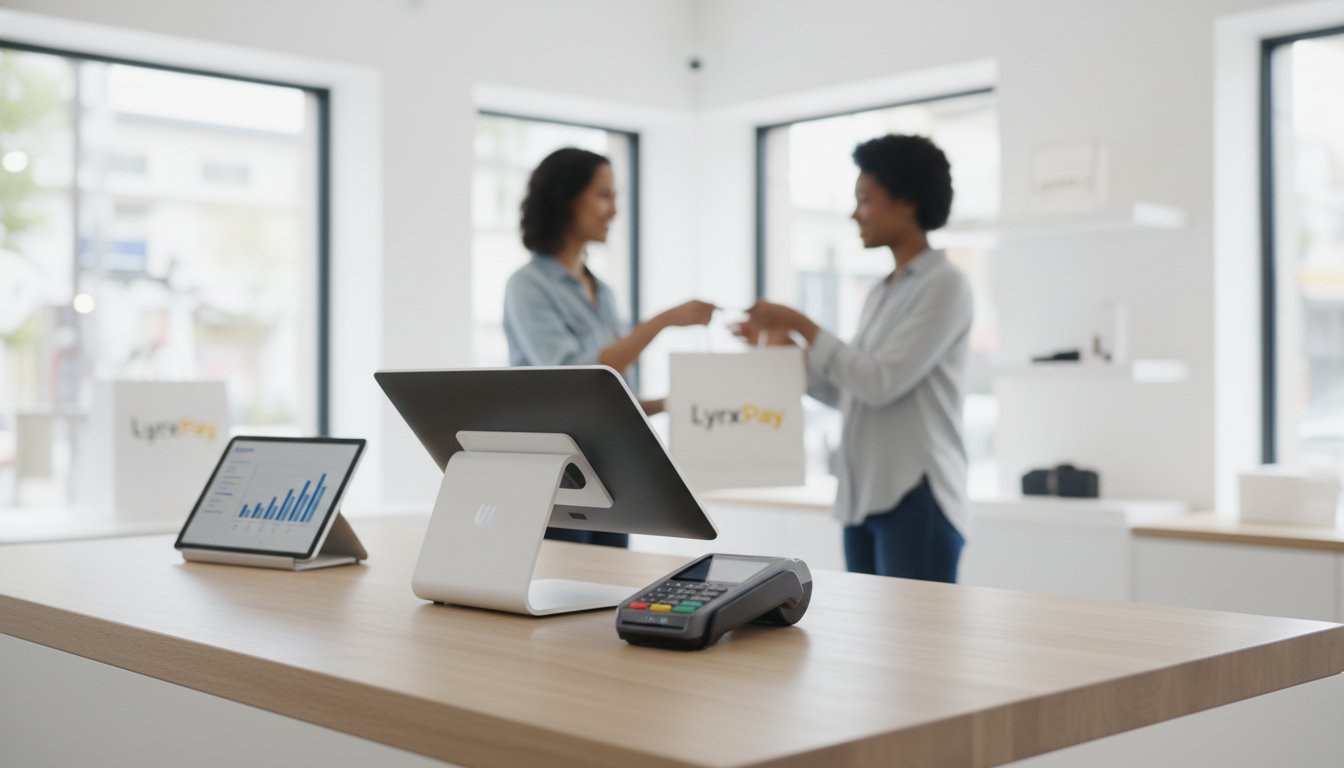
What if your checkout counter did more than just take payments; what if it actually managed your entire back office while you slept? Most business owners are tired of the friction caused by integrated POS hardware and software that doesn't actually talk to their accounting tools. You likely spend hours every week manually typing sales data or worrying about how hidden merchant fees are quietly eating your profits. It's exhausting to feel like your technology is working against you rather than for you. We understand that frustration, and we're here to help you move past it.
In this guide, you'll learn how to select a system that finally bridges the gap between your storefront and your financial workflows. We'll show you how to eliminate manual data entry, secure next-day deposits for better liquidity, and lower your overall processing costs. We'll explore the critical 2026 standards you need to know, including mandatory PCI DSS 4.0 compliance and the best ways to automate your QuickBooks or Xero synchronization to regain your time.
Key Takeaways
- Stop wasting hours on administrative tasks by understanding how integrated POS hardware and software bridges the gap between your physical counter and your digital office.
- Avoid the "free hardware" trap by learning how to calculate the true cost of ownership and identify hidden processing fees that eat into your profit.
- Streamline your financial health with automatic QuickBooks reconciliation and direct payroll exports that eliminate the need for manual data entry.
- Improve your customer retention through faster checkouts and built-in loyalty programs that make every transaction feel personal and efficient.
- Gain peace of mind with a concierge-style setup that handles the heavy lifting of integration so you can focus on growing your business.
What is Integrated POS Hardware and Software?
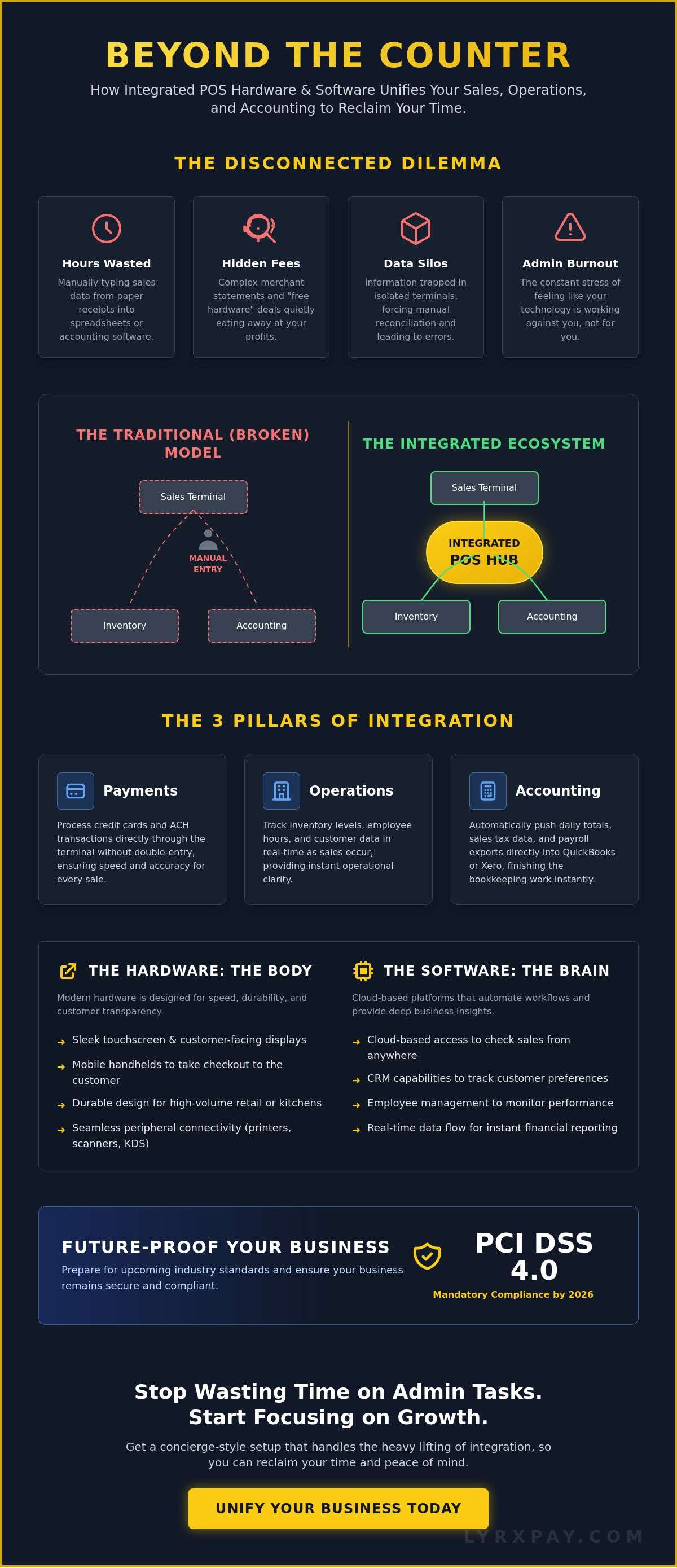
Think of your business as a living organism. If the hardware is the body, the software is the brain. For years, many merchants relied on "dumb" terminals. These were isolated devices that did little more than swipe a card and pop a drawer. In 2026, that approach is a recipe for administrative burnout. A modern Point of Sale (POS) system is no longer just a place where transactions happen; it's a unified ecosystem where every swipe, tap, and inventory update talks to your bank and your books instantly. Choosing the right integrated POS hardware and software isn't just a tech upgrade; it's a commitment to your own sanity.
The true power of integrated POS hardware and software lies in its ability to act as a defender of your time. Traditional systems create "data silos" where information is trapped in the terminal. This forces you to spend hours on manual reconciliation, typing numbers from a paper receipt into a spreadsheet. Integration smashes those silos by focusing on three essential pillars:
- Payments: Processing credit cards and ACH transactions directly through the terminal without double-entry.
- Operations: Tracking inventory levels and employee hours in real-time as sales occur.
- Accounting: Pushing daily totals and tax data directly into your general ledger.
If you've ever spent a Sunday night staring at a stack of receipts while trying to reconcile your bank statement, you know exactly why the traditional model is broken. Integration fixes this by ensuring that the moment a customer pays, the work of the bookkeeper is already half-finished.
The Hardware Component: Beyond the Cash Drawer
Modern hardware is designed for speed and clarity. We've moved far beyond the clunky, beige registers of the past. Today's terminals feature sleek touchscreen interfaces and customer-facing displays that improve transparency. For businesses on the move, mobile handhelds allow you to take the checkout to the customer, whether that's at a table or on a showroom floor. These devices must be durable enough to withstand high-volume retail or the heat and spills of a busy kitchen. Peripheral connectivity is also vital; your terminal should seamlessly link with receipt printers, barcode scanners, and kitchen display systems (KDS) to keep the entire team in sync.
The Software Component: The Brain of the Operation
The software is where the magic of "managed care" for your business happens. Most modern systems are now cloud-based, meaning you can check your sales figures or adjust inventory from your phone while you're away from the shop. Beyond simple transaction processing, these platforms offer deep feature sets including CRM capabilities to track customer preferences and employee management tools to monitor performance. Integrated POS software creates a seamless, real-time data flow that ensures every sale is instantly reflected in your financial reporting without a single keystroke of manual entry. This level of automation doesn't just reduce errors; it gives you the clarity needed to make informed decisions about your business's future.
Key Benefits of a Unified Point of Sale Ecosystem
When your front-end sales and back-end reporting live in the same ecosystem, the benefits go far beyond just saving time. You've likely felt the sting of a manual entry error that threw off your books for an entire month. A unified integrated POS hardware and software setup acts as a permanent shield against those mistakes. By automating the flow of data, you ensure that what happens at the counter is exactly what appears in your ledger. This level of precision provides the clarity needed to analyze profit margins without second-guessing your data records.
The U.S. Small Business Administration highlights several benefits of a modern POS system, including the ability to track every penny with granular detail. If you implement real-time stock alerts, then you can stop worrying about surprise shortages during your busiest hours. In 2026, inventory intelligence is about more than just counting boxes; it's about automated reordering triggers that keep your shelves full while you focus on your customers. This financial transparency means you can see which products are truly driving your revenue and which are simply taking up space.
Streamlining the Customer Journey
Modern shoppers expect a frictionless experience whether they are standing in your store or browsing on their phones. Omnichannel capabilities allow you to sync in-store sales with e-commerce platforms, ensuring your inventory is accurate across all channels. Faster checkouts. Happier customers. Better margins. By accepting credit cards, ACH, and mobile wallets through one interface, you remove the obstacles that lead to abandoned sales. Digital receipts and built-in loyalty programs allow you to build a robust customer database at the point of purchase, turning a one-time visitor into a lifelong advocate for your brand.
Operational Efficiency and Staff Management
Efficiency isn't just about the customer; it's about how your team operates behind the scenes. Integrated time-clocks and performance monitoring allow you to track employee hours and sales productivity without juggling separate spreadsheets. You can also protect your business with tiered permission levels, ensuring that sensitive financial data is only accessible to those who need it. See how specialized systems work in our point of sale systems for restaurants guide to understand how these tools adapt to different industry needs. If you're ready to see how these efficiencies can protect your specific margins, exploring a tailored proposal can provide the clarity you need to move forward with confidence.
Evaluating the Total Cost of Ownership (TCO)
Don't let a low price tag at the start blind you to the long-term drain on your bank account. When you're selecting a POS system, looking at the sticker price is only the first step. The true cost of integrated POS hardware and software includes subscription fees, transaction rates, and the inevitable maintenance of your physical terminals. Many providers offer "free" hardware, but this is often a trap designed to lock you into inflated processing rates that cost you thousands more over the life of the contract. It's better to pay for your gear upfront than to let a provider take a larger piece of every sale you make.
Software licensing is another area where costs can quietly creep up. You'll usually choose between a flat monthly subscription or a model that charges per transaction. If your volume is high, a monthly fee is almost always the more economical choice. You also need to factor in support. Hardware eventually breaks, and software requires regular updates to stay secure. If your provider doesn't include these in the package, you might face unexpected bills just to keep your checkout lane open. Auditing your merchant statement for "junk" fees like statement fees or compliance surcharges is essential to protecting your margins.
Hardware Costs vs. Processing Rates
Buying your equipment outright protects your liquidity because it allows you to negotiate for Interchange-Plus pricing. This model is the gold standard for transparency, as it separates the actual cost of the transaction from the provider's markup. For example, a basic mobile card reader might cost between $49 and $69, while a full terminal can range from $700 to $1,500. While leasing might seem attractive for its low entry cost, it often leads to higher total payments over time. You can learn the details of how to lower merchant fees to ensure your technology investment actually delivers a positive ROI.
Liquidity and Deposit Speed
Waiting for your money is a burden no business should carry. Standard settlement timelines can take several days, but modern integrated systems prioritize next-day deposits. This speed is a vital component of your operational health. Rapid access to your funds ensures you can restock inventory and meet payroll obligations without the stress of waiting for a bank transfer to clear. If your system keeps your cash in limbo, then it's not truly working for you.
The Critical Connection: QuickBooks and Payroll Integration
How much time did you spend last week manually typing sales totals into your accounting software? For many, the answer is "too much." If your integrated POS hardware and software doesn't talk to your ledger, then it isn't really integrated; it's just a digital paperweight. True efficiency happens when every transaction automatically flows into your general ledger. This automatic reconciliation eliminates the "human element" that often leads to costly errors during tax season. With the official discontinuation of QuickBooks Desktop POS 19.0, moving to a cloud-based integration is no longer optional. It's the only way to ensure your sales data, tax collection, and inventory updates remain secure and compliant with 2026 standards.
By centralizing these financial workflows, you provide your business with massive bookkeeping relief. Industry data suggests that merchants can reduce the hours spent on back-office tasks by 50% or more once manual data entry is removed. This isn't just about saving time; it's about accuracy. If your sales tax is recorded automatically across all locations, then your risk of a compliance audit drops significantly. You deserve a system that acts as a defender of your resources, allowing you to focus on your customers rather than your spreadsheets.
Expert QuickBooks Integration
Generic API plug-ins often fail because they don't understand the nuances of your specific business. You need an expert-led setup that correctly maps your sales categories to your Chart of Accounts. If returns, discounts, and gift cards aren't handled properly at the point of sale, then your end-of-month reports will never balance. A curated integration ensures that every line item lands exactly where it belongs. This level of "managed care" for your accounting ensures that your financial reporting is always ready for a deep dive or a bank loan application.
Unified Payroll Solutions
Your POS should also be the primary source of truth for your labor costs. By integrating your time-clock and sales data, you can track commissions and tips without opening a single spreadsheet. Centralizing this employee data reduces administrative overhead and provides real-time labor cost reporting. This allows you to see exactly how much you're spending on staffing relative to your sales at any given hour. If you're ready to stop the manual typing and start automating your financial health, get a custom proposal for your QuickBooks integration today. We handle the heavy lifting of the setup so you can get back to the craft of running your business.
LyrxPay: Your Partner in Integrated POS Excellence
Selecting the right technology is only half the battle; the other half is ensuring that technology actually works for your specific business goals. At LyrxPay, we don't just ship you a box and wish you luck. We act as a dedicated ally in your operational health, providing integrated POS hardware and software solutions that are configured to your unique workflows from day one. Our concierge-style support means we handle the heavy lifting of the initial setup and software integration, allowing you to stay focused on your customers while we manage the technical details.
We believe that your payment processor should be a defender of your margins, not a drain on them. That's why we offer a lower-fee guarantee and transparent credit card and ACH processing rates that protect your bottom line. Beyond just taking payments, we focus on your liquidity. Our next-day deposits ensure that the revenue you earn today is available in your bank account tomorrow, providing the cash flow you need to restock inventory or meet payroll without delay. By connecting your POS directly with our professional bookkeeping and payroll services, we create a closed-loop system where your data is always accurate and your back-office tasks are virtually automated.
Beyond the Hardware
Most providers treat you like a ticket number in a massive queue. We take a different path. Our "managed care" approach to business administration ensures that you receive personal attention from experts who understand your industry. If you have a question about a transaction or need to adjust your reporting, you talk to a human who knows your account. This level of curated service is a core reason why merchants often look for Clover alternatives for small business that offer more than just a generic interface. We pride ourselves on being a long-term partner in your success rather than just another vendor.
Ready to Streamline Your Operations?
Transitioning to a new system shouldn't mean shutting your doors. We've refined our transition process to ensure zero downtime, moving your data and setting up your new integrated POS hardware and software behind the scenes. Whether you need a rugged terminal for a high-volume retail shop or a mobile handheld for a restaurant floor, we customize the hardware and software to fit your specific needs. We're ready to help you eliminate the stress of manual data entry and hidden fees. Contact LyrxPay for a customized POS and processing quote today and discover how much more efficient your business can be when your technology finally works together.
RECLAIM YOUR TIME AND PROTECT YOUR MARGINS
You've seen how the right technology transforms your back-office from a source of daily stress into a streamlined engine for growth. By choosing a system that prioritizes automatic reconciliation and transparent pricing, you're doing more than just upgrading your checkout counter; you're securing your business's financial health. True efficiency comes from a setup where your sales data flows directly into your ledger without a single manual keystroke. Investing in integrated POS hardware and software is the most direct path to reducing administrative overhead and ensuring your data is always audit-ready.
We're here to ensure you never have to wait for your money or guess about your processing fees. With our expert QuickBooks and Xero integration, next-day deposits for all merchants, and a commitment to lower transaction fees, we handle the technical heavy lifting so you can focus on your craft. It's time to move away from "dumb" terminals and toward a partnership that values your time as much as you do. Get a Transparent Quote on Integrated POS Solutions and start building a more efficient, profitable business today. We're ready when you are.
Frequently Asked Questions
What is the difference between an integrated POS and a non-integrated POS?
The primary difference is that an integrated system automatically syncs transaction data with your accounting and management tools, whereas a non-integrated POS operates in an isolated silo. Non-integrated terminals require you to manually type sales totals into your ledger at the end of the day, which often leads to human error. An integrated setup acts as the central nervous system of your business, ensuring that sales, inventory, and bookkeeping are always in perfect balance without manual intervention.
Can I use my existing hardware with new integrated POS software?
Yes, many modern integrated POS hardware and software solutions are compatible with industry-standard peripherals like barcode scanners, receipt printers, and cash drawers. While some proprietary systems require specific terminals, we frequently help merchants repurpose their current equipment to minimize upfront investment. It is best to have an expert audit your current gear to ensure it meets the 2026 security and connectivity standards required for a seamless transition.
How does an integrated POS system help with QuickBooks accounting?
Integrated systems push sales totals, tax data, and inventory updates directly into QuickBooks Online, which eliminates the need for manual reconciliation. This real-time data flow ensures your general ledger is always current and your financial reports are accurate for tax season. By automating the connection between your storefront and your books, you provide a level of "managed care" for your finances that saves your team hours of administrative work every week.
Is an integrated POS system more expensive than a traditional credit card terminal?
While the initial cost of a full POS terminal may be higher than a basic credit card reader, the total cost of ownership is often lower due to reduced labor costs and more transparent processing rates. Traditional terminals often hide their true cost in higher transaction fees and the administrative burden of manual data entry. By automating your inventory and bookkeeping, an integrated system pays for itself through increased operational efficiency and the elimination of costly accounting errors.
How long does it take to set up an integrated POS system?
Most businesses can be fully operational with a new system within 7 to 14 days, depending on the complexity of your inventory and accounting mapping. We handle the heavy lifting of the configuration and data migration behind the scenes to ensure you experience zero downtime. Our concierge-style approach means we walk you through every step of the transition, so you don't have to struggle with technical manuals or complex software settings on your own.
Does LyrxPay offer next-day deposits for all integrated POS transactions?
Yes, LyrxPay provides next-day deposits for all merchants to ensure your liquidity remains strong and your cash flow is predictable. We understand that waiting for your funds can hinder your ability to restock inventory or meet payroll obligations. By prioritizing rapid settlement, we help you keep your business moving forward without the stress of standard bank delays. This fast access to capital is a core part of our commitment to being your reliable professional ally.
What happens if my internet goes down? Does the POS still work?
Most modern systems feature an offline mode that allows you to continue taking payments and processing sales even if your internet connection fails. The system securely stores the transaction data and automatically syncs it with your cloud management tools once the connection is restored. This functionality ensures that a local outage doesn't result in lost revenue or a frustrated line of customers. You can keep your business running smoothly regardless of technical hiccups or service interruptions.
Can I track inventory across multiple locations with an integrated system?
Absolutely, an integrated POS hardware and software ecosystem allows you to view and manage inventory across every one of your locations from a single, centralized dashboard. You can track stock levels in real-time, transfer items between stores, and receive automated alerts when specific products are running low. This visibility is essential for growing businesses that need to maintain accuracy across a larger footprint without the headache of manual spreadsheets or phone calls between managers.